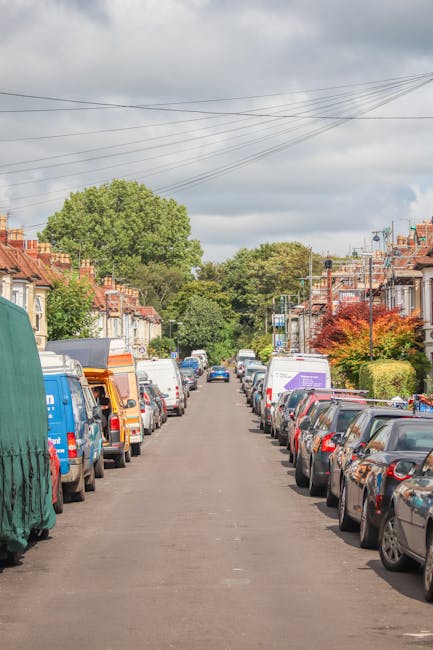
Rushey Green House Removals Narrow Street Access Tips
Moving house on Rushey Green can be straightforward on paper and surprisingly fiddly on the day. Narrow roads, parked cars, tight turning space, busy local traffic, and awkward front doors all have a way of turning a simple removal into a careful logistics job. If you are planning Rushey Green house removals narrow street access tips, this guide will help you prepare properly, reduce stress, and avoid the little problems that cause the big delays.
The good news? Most access issues can be managed with a bit of planning. You do not need a giant truck, a perfect driveway, or a flawless weather forecast. You do need a sensible loading plan, realistic timings, and a removal team that understands how to work in tight London streets. Let's face it, one badly parked car can change the whole rhythm of a move.
Below, you will find practical advice on vehicle choice, parking strategy, packing order, neighbour communication, safety, and the kinds of local details that make a real difference. If you are comparing moving options too, you may also find it useful to look at house removals in Catford, man with van support in Catford, and the wider removal services available for different move sizes.
Table of Contents
- Why Rushey Green house removals narrow street access tips Matters
- How Rushey Green house removals narrow street access tips Works
- Key Benefits and Practical Advantages
- Who This Is For and When It Makes Sense
- Step-by-Step Guidance
- Expert Tips for Better Results
- Common Mistakes to Avoid
- Tools, Resources and Recommendations
- Law, Compliance, Standards, or Best Practice
- Options, Methods, or Comparison Table
- Case Study or Real-World Example
- Practical Checklist
- Conclusion
- Frequently Asked Questions
Why Rushey Green house removals narrow street access tips Matters
Narrow street access is not just a small inconvenience. It affects whether the van can park at the property, how far your belongings need to be carried, how long the move takes, and whether anything needs to be split into smaller loads. On Rushey Green, where street layout and parking conditions can vary from one property to the next, access planning is often the difference between a calm move and a very long day.
In practice, access issues can affect almost every part of the process. If the vehicle cannot stop close enough to the entrance, movers may need extra trolleys, more carrying time, and more careful handling on stairs or along pavements. That is not a disaster, but it does mean the plan should reflect reality rather than hope. Hope is lovely. It is not a moving strategy.
It also matters for safety. Tight spaces increase the chance of bumping walls, scraping doors, tripping on uneven surfaces, or slowing down in a way that puts strain on the team. Good access planning protects the property, your furniture, and the people moving it. If you are dealing with heavier items or fragile pieces, you may want to think ahead about specialist help from furniture removals support or even piano removals if the move includes delicate, bulky equipment.
There is also a timing angle. In a narrow street, one late arrival, one blocked space, or one missed parking arrangement can ripple through the entire schedule. That affects handovers, cleaning windows, and your own energy levels. And to be fair, moving day already has enough drama without the van doing a three-point turn in the rain.
How Rushey Green house removals narrow street access tips Works
The basic idea is simple: you assess the street before moving day, choose the right vehicle and loading method, and reduce the number of surprises. But the details matter. A good plan usually starts with understanding the route the van will use, where it can reasonably stop, and how far the removal team will need to carry items from door to vehicle.
For a narrow street, the moving process usually works best in one of three ways:
- Direct kerbside loading where the van can park close enough to the property for quick loading.
- Short carry loading where items are moved a little further on foot using trolleys, straps, and careful handling.
- Shuttle loading where a larger van or lorry cannot get close, so smaller vehicle movements or phased loading are used.
The right approach depends on the street width, the level of parking pressure, the time of day, and how much furniture you are moving. For example, a single-bedroom flat with boxed items is very different from a full family house move with wardrobes, beds, and white goods. If your move is lighter, a smaller vehicle can sometimes make everything easier. That is one reason many people look at man and van options in Catford or a more flexible removal van rather than assuming the biggest vehicle is always best.
In narrow-access moves, the team should also check practical details like whether the front path is level, whether there are steps, where protective floor coverings may be needed, and whether doors or gates open fully. Sometimes the problem is not the street at all; it is the last six metres from the gate to the front room. That little stretch can be the awkward bit.
Key Benefits and Practical Advantages
Planning for narrow street access is not just about avoiding problems. It brings clear benefits that make the move smoother, quicker, and less tiring.
- Less waiting around: the team can get straight to work instead of hunting for a parking spot or figuring things out on the fly.
- Lower risk of damage: fewer rushed manoeuvres means fewer knocks to furniture, walls, and door frames.
- Better timing: you are more likely to finish within the planned window, which helps if you are moving in stages or handing keys over.
- Reduced physical strain: shorter, better-organised carries are easier on everyone involved.
- Cleaner decision-making: once access is understood, you can choose the right vehicle, crew size, and packing order.
There is a quieter benefit too: peace of mind. When you know the difficult parts have been thought through, the day feels less chaotic. That matters more than people admit. Moving is noisy, repetitive, and full of tiny decisions. Anything that reduces that mental load is worth doing.
If you want a broader overview of move types and how the service is usually structured, it can help to read the general services overview and compare it with the specifics of your home. A careful plan for one street may be completely wrong for another, even if they look similar on a map.
Who This Is For and When It Makes Sense
This advice is useful for almost anyone moving on or near Rushey Green, but some people need it more than others. If any of the following sounds familiar, narrow access planning should be near the top of your list.
- You live on a road with parked cars on both sides most of the day.
- Your property is in a terrace, flat conversion, or maisonette with limited frontage.
- You have large or awkward items such as wardrobes, sofas, beds, appliances, or fragile instruments.
- You are moving at a busy time of day when traffic is heavier.
- You expect a same-day handover and need the move to run to schedule.
- You are not sure whether a full removal lorry can reasonably stop outside.
It also makes sense if you are moving after a long tenancy and your packing is still a work in progress. In those cases, the removal team may need to work more flexibly, and smaller-vehicle support can be handy. That is where same day removals in Catford or man and a van support can be practical, depending on the scale of the job.
Families, students, downsizers, first-time buyers, landlords, and office movers all face different pressure points. A student move may mostly be about boxed belongings and a few pieces of furniture. A family move on a narrow road, by contrast, can involve a van blocked by parked vehicles, children underfoot, and a tight time slot. Very different, same street.
Step-by-Step Guidance
Here is a sensible way to plan narrow-street removals in Rushey Green without overcomplicating things.
- Assess the street in person. Walk the route from the property to where a van could realistically stop. Look at width, turning room, lamp posts, bends, parked cars, and any low branches or overhanging signs.
- Measure the awkward bits. Check doorway widths, staircase turns, hallway corners, and any gate or porch restrictions. Large furniture often fails at the last corner, not in the street.
- Decide on the right vehicle size. A smaller van may be easier to place and load than a larger truck. The best choice depends on how much you are moving, not on ego. Moves have no need for a vanity contest.
- Talk through parking and timing. Ask how long loading is likely to take, what arrival window is sensible, and whether an early start reduces parking pressure.
- Pack for access efficiency. Put heavier boxes in clearly labelled groups, keep fragile items separate, and avoid last-minute loose items that slow down the process.
- Prepare the property. Clear the pathway, remove hazards, protect floors where needed, and keep keys, documents, and essentials in one easy-to-reach place.
- Brief neighbours if needed. A quick, polite note can prevent frustration if a van will be near a shared driveway or if space is tight for a short period.
- Stay flexible on the day. Access conditions can change. A van bay might already be occupied, or traffic might be slower than planned. Have a backup position in mind.
A small but useful point: set aside one "arrival box" with kettle, chargers, snacks, tea bags, and basic toiletries. It sounds simple, but when you arrive to a half-busy new home and the box mountain begins, that one box feels like a tiny luxury.
Expert Tips for Better Results
In our experience, the best narrow-access moves are not the fastest on paper; they are the ones that remove uncertainty. That starts with a few habits that often get skipped.
Choose the quietest loading window you can
Very early morning can sometimes help with parking, but it depends on local conditions and whether it suits your building. Mid-morning may be more practical if you need time to clear the property, though traffic can be heavier. There is no perfect hour. The better question is: when can the van stop closest with the least friction?
Use furniture protection from the start
Blankets, covers, tape, and proper wrapping matter more in narrow spaces because there is less room to correct mistakes. A wardrobe edge scraping a wall in a tight hallway is a classic moving-day annoyance. It is avoidable, which is the annoying part.
Think in load order, not room order
It can be tempting to pack room by room and stop there. But for narrow access moves, the loading order often matters more than the room order. Put out the items that are heaviest, bulkiest, and least awkward to carry first if the route to the van is tight. This can save repeated back-and-forth.
Use a smaller vehicle if the street demands it
If access is really constrained, a smaller vehicle with fewer turning issues may outperform a bigger one with more capacity. A more nimble approach can be the smarter one. If your move is modest, something like removal services paired with the right-sized vehicle can be far more efficient than overcommitting to a larger setup.
Keep one person focused on access
On the day, someone should stay alert to parking, directions, and any changes outside while the others handle packing or loading. That one point of contact cuts down on crossed wires and repeated instructions. A small thing, but it helps.
Common Mistakes to Avoid
A lot of moving headaches come from a handful of predictable mistakes. Most are easy to avoid once you know what to look for.
- Assuming the van will fit without checking. Streets that look fine from memory can feel very different with parked cars on both sides.
- Booking too large a vehicle. Bigger is not always better on a narrow road.
- Leaving parking plans until moving day. By then, the best options may already be gone.
- Packing in a way that slows the load. Loose items, unlabelled boxes, and unstable piles all waste time.
- Ignoring the final carry from door to van. Short carrying distances still matter if the route includes stairs, uneven paving, or a sharp corner.
- Forgetting about neighbours and access sharing. Shared entrances, driveways, and bins can create friction if nobody has been informed.
Another common issue is underestimating the emotional side of the day. People often feel rushed and start making quick decisions that are not actually helpful. That is how items get moved twice, labels go missing, and everyone ends up asking where the tea box is. It happens.
Tools, Resources and Recommendations
You do not need complicated kit, but a few practical tools can make a narrow street move much smoother. The aim is to reduce carrying effort, protect items, and keep the process moving.
| Tool or Item | Why It Helps | Best Use in Narrow Access Moves |
|---|---|---|
| Furniture blankets | Protects surfaces from knocks and scrapes | Useful when carrying through narrow hallways and tight van entry points |
| Straps and ties | Keeps items stable in transit | Helps when the van must brake frequently in busy streets |
| Hand trolley or sack truck | Reduces lifting strain | Ideal when the van cannot park directly outside the door |
| Strong labels and marker pens | Makes loading and unloading faster | Useful for sorting items when space is tight and speed matters |
| Floor protection | Reduces scuffs and dirt transfer | Helpful in entryways, stairwells, and shared hall areas |
For planning support, it is worth reviewing practical pages such as packing and boxes and the broader removals information. Good packing is not glamorous, but it is the backbone of a tidy move. A poorly packed box on a narrow staircase is, frankly, a bad idea waiting to happen.
If you are moving a home with a lot of furniture, having a clear idea of storage options can also help if access constraints mean you need to split the move into more than one stage.
Law, Compliance, Standards, or Best Practice
For most household moves, the main concern is not legal complexity but safe and considerate practice. Even so, it is sensible to think about a few standards and expectations that affect narrow street removals in the UK.
First, vehicles should be parked responsibly and in line with local restrictions. That sounds obvious, but in a tight street the temptation to stop "just for a minute" can be strong. It is better to plan a lawful stopping point and build the move around it than to improvise in a way that blocks access or risks a penalty.
Second, moving teams should use safe lifting methods, proper equipment, and careful handling where needed. UK manual handling practice is built around reducing strain and avoiding preventable injury. In plain English: do not try to muscle a wardrobe through a doorway if the route is already awkward.
Third, if you are using a removal company, it is sensible to review their insurance, safety approach, and terms before the move. That is not being fussy. It is basic good sense. You can also look at pages such as insurance and safety and terms and conditions to understand how the company frames responsibility and process.
Finally, if your building has shared access, communal areas, or accessibility considerations, best practice is to keep the route clear, communicate with others affected, and avoid creating unnecessary obstruction. A move that respects the space is usually a less stressful move for everyone. Simple, really.
Options, Methods, or Comparison Table
Different access setups call for different moving methods. Here is a straightforward comparison to help you judge what makes most sense.
| Method | Best For | Pros | Trade-Offs |
|---|---|---|---|
| Large removal vehicle | Big household moves with good access | High capacity, fewer trips | May struggle with tight parking or sharp corners |
| Smaller removal van | Narrow streets and moderate loads | Easier parking, more flexible positioning | May need more careful load planning |
| Man and van setup | Smaller moves, student moves, flexible scheduling | Practical, nimble, often efficient in tight roads | Less suitable for very large households |
| Phased or shuttle loading | Very restricted access | Can solve difficult street layouts | Takes longer and needs more coordination |
For some households, the right answer is a blended approach. Maybe the main furniture goes in a van, while boxed items are handled separately. Maybe you use temporary storage for a day or two to reduce pressure. There is no prize for making it harder than it needs to be.
Case Study or Real-World Example
Here is a realistic example based on the sort of move people often face around Rushey Green.
A couple moving from a first-floor flat on a narrow residential street had a decent amount of furniture: a bed, mattress, sofa, dining table, boxed kitchenware, and several fragile items. The street was already half-full of parked cars by late morning, and the entrance had a small step plus a short path to the front door. Nothing dramatic, just enough to slow things down if they had not planned properly.
Instead of booking a large lorry, they chose a smaller van and agreed an earlier start. They packed fragile items separately, labelled boxes by priority, and cleared the hallway the night before. A neighbour had been told in advance that the van would need a short loading space, which avoided awkward questions on the morning. Not glamorous. Very effective.
The move still took effort, of course. It was a moving day, not a picnic. But because the team could park closer, the load was steadier and the route was easier to manage. The biggest win was that nobody spent half the morning waiting for the van to work out where it could stop.
That is the kind of small planning change that makes narrow street removals feel manageable rather than chaotic. If the move had been larger or more complex, a more structured service such as house removals support would have been a sensible next step.
Practical Checklist
Use this checklist a few days before the move, then again on the morning itself.
- Check the street width, turning space, and likely parking options.
- Measure doorways, hallways, stairs, and any awkward corners.
- Decide whether a smaller van would be easier than a larger vehicle.
- Tell the removal team about gates, steps, shared entrances, or tight entrances.
- Pack heavy items separately and label fragile boxes clearly.
- Keep essential documents, keys, chargers, and medication in one hand-carry bag.
- Clear the route inside the property before the van arrives.
- Protect floors, corners, and furniture surfaces where needed.
- Think about neighbour access and any shared parking pressure.
- Have a backup plan if the original loading position is blocked.
Expert summary: the smartest narrow-street move is usually the one that simplifies parking, shortens the carry, and keeps the load organised. If you sort those three things early, everything else gets easier. Not effortless, but easier. And on moving day, that is a very good deal.
Conclusion
Rushey Green house removals narrow street access tips are really about one thing: turning a tricky street into a workable plan. When you know where the van can stop, how the items will be carried, and what the access constraints actually are, the whole move becomes more predictable. That means fewer delays, less damage risk, and a calmer day for everyone involved.
It is worth remembering that narrow access does not automatically mean a difficult move. It just means the move needs a bit more thought. A smaller van, better packing, early communication, and a sensible loading plan can make a big difference. Sometimes the best solution is not bigger or faster. It is simply better matched to the street in front of you.
If you are still weighing up your options, take a look at the relevant service information, compare the approach that fits your property, and choose the route that feels genuinely manageable. That bit of planning pays you back on the day, usually several times over.
Get a free quote today and see how much you can save.
And if you do end up with a bit of moving-day chaos anyway, well, that is life in London sometimes. The kettle will be on before long.
Frequently Asked Questions
What is the best van size for a narrow street move on Rushey Green?
The best van size depends on how much you are moving and whether the street allows easy stopping. In many narrow-access cases, a smaller van is easier to place and may save time overall. The point is not to maximise capacity; it is to match the vehicle to the access.
Should I book a larger removal vehicle to make fewer trips?
Only if the street can comfortably take it. A larger vehicle may reduce trips, but if it cannot park close enough, the extra carrying time can cancel out the benefit. On narrow roads, a slightly smaller, more manoeuvrable vehicle often works better.
How do I prepare for limited parking on moving day?
Check the street in advance, identify likely stopping points, and think about the busiest times of day. If parking is tight, tell your removal team early so they can plan around it. Even a small change in arrival time can help.
Do I need to tell my neighbours about the move?
You do not always need to, but it is usually courteous if the van may affect shared access, parking, or a narrow frontage. A simple heads-up can prevent frustration and keep things friendly. That matters more than people think.
What if the van cannot get directly outside my property?
That is common enough. The move may be handled with a short carry, trolley use, or a smaller vehicle positioned nearby. The key is to plan for that possibility instead of discovering it mid-load.
Can I still move large furniture from a narrow street?
Yes, but it may need more careful handling, protective wrapping, and more time for loading. In some cases, larger items are easier to move with a tailored service such as furniture removals or by using a van that fits the street properly.
How early should I plan narrow-access removals?
As early as you can. Even a brief street check a few days before the move can reveal parking patterns, turning space, and access points. The more notice you have, the better your chances of avoiding last-minute changes.
What should I pack first if access is tight?
Start with items you do not need until after the move, then group heavy or bulky belongings in a way that makes loading logical. Clear labelling helps too. You want the loading order to be efficient, not random.
Are same-day removals a bad idea for narrow streets?
Not necessarily. Same-day removals can work if the access is simple enough and the move is not too large. If the street is tight, though, the plan needs to be even more organised. Spontaneous is fine; unplanned is not.
What safety checks matter most on narrow streets?
Safe lifting, stable loading, clear walkways, and a proper parking position matter most. It is also sensible to protect corners, keep entry routes clear, and avoid blocking pedestrians. The little things reduce the risk of avoidable damage.
How do I know whether I need storage as part of the move?
If access is limited and your move is large, storage can help split the process into manageable stages. It is especially useful if your property is not ready, or if you are trying to reduce the amount of furniture moving through a tight entrance all at once.
Where can I find more help for a Rushey Green move?
Start by reviewing the wider removal information, then choose the option that suits your home size and street access. If you want to speak with a team about practical moving arrangements, the best next step is to use the site's contact page and explain the access conditions clearly.